

From cart to customer: Closing the ecommerce gap in wholesale
When the eWholesale Collective gathered to tackle why wholesale platforms keep falling short for customers, the solution was surprisingly simple
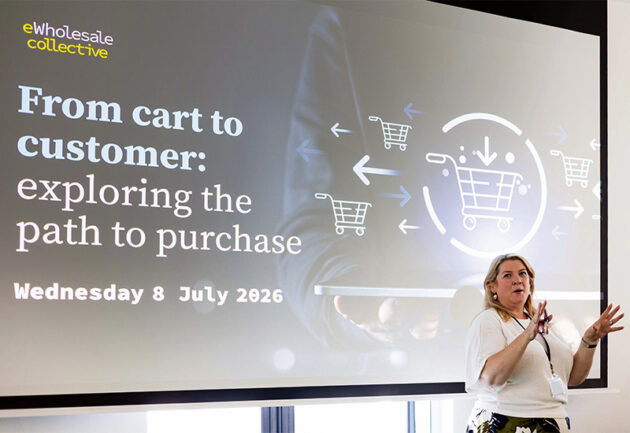
Wholesale’s leading e-commerce voices recently gathered for an eWholesale Collective event at Notting Hill’s Museum of Brands, bringing together customers, suppliers, researchers and platform experts from across the sector. With the museum’s collection charting more than a century of British culture, including many of the brands that wholesale supplies to shelves today, the venue offered a fitting backdrop.
The event covered topics ranging from consumer research and platform strategy through to a live AI panel and closing breakout discussions.
A consistent message emerged throughout the day: before wholesale chases the next wave of AI-powered innovation, it needs to fix the fundamentals.
Winning the path to purchase
The day opened with Andy Crossan, Head of Insight at Lumina Intelligence, setting out the wider market context before offering four practical levers for e-commerce success.
Crossan identified online shopping to now be the dominant buying channel in wholesale, with 71% of foodservice and retail operators using it as their main route to purchase, and average order values rising sharply even as visit frequency remains flat. Yet growing frustrations with cross-channel shopping, felt particularly online, suggest there is still plenty of friction standing inthe way of a smooth shopper journey.
THE FOUR E-COMMERCE LEVERS
- Improve the shopper journey by fixing the biggest friction points – notably the home page, which is the most common exit point on any wholesale site, and the search bar, where accuracy and speed are critical.
- Disrupt the journey through smarter timing – basket-adding peaks in the evening and unplanned purchases are driven overwhelmingly by promotions and known bestsellers.
- Build adaptive, relevant content around the products retailers actually search for – more than a third of retailers’ searches include a brand name, against just 1 in 10 for foodservice.
- Display advertising must be effective – top home page banners consistently outperform side placements and clear profit-on-return messaging converts best
The discussion that followed brought forward some honest admissions frombrand representatives. The standout issue was that most creative content is still built retail-first and repurposed for foodservice without real adaptation.
PepsiCo pointed to its ‘little slice of joy’ campaign for Walkers as a case study. The campaign was hugely effective with retail customers, but the team admitted they’re still working out how that message cuts through in the foodservice sector and are testing different messaging to properly measure the impact on basket spend.
Weather emerged as another underused lever, with heatwaves reliably driving top-up purchases in water, chilled and alcohol categories. This gap will only close through better collaboration between brand, retail and foodservice teams.

The voice of the customer: reordering, discovery and expertise
Stephanie Holland, Founder of Hush Research & Strategy, kicked off the next session by drawing on around 200 store visits across the UK and Europe to reframe digital wholesale platforms around real retailer behaviour rather than assumed user journeys.
“This isn’t about tech, this is about the people, the context, the environment,” she told delegates.
The challenge today isn’t simply getting operators online but making their experience online easier.
Retailers are juggling more wholesalers than before, margins are squeezed harder and inboxes are so saturated that most communication becomes noise.
Crucially, most purchase decisions are made before login: 83% of foodservice and 70% of retail operators say they rarely buy something online they hadn’t already planned to and roughly half arrive with a shopping list already set.
TENSIONS
Holland argued that no platform has fully solved three recurring tensions between customer reality and platform design: reordering, discovery and expertise. The focus of reordering is speed – the platform’s main job is fast, frictionless replenishment and any hurdle that wastes time causes the biggest frustration. Discovery mostly happens away from the platform, through reps, social media and trade events – trust isn’t built on whether the recommendation comes from a human but whether it actually adds value. When it comes to expertise, retailers trust their own judgement over any recommendation engine, so offers tailored to known buying patterns are what earn real loyalty.
CONSISTENT
Beneath the complexity, operators’ needs remain consistent – save my time, protect my profit, make it simple, respect my expertise.
Holland tested this by asking retailers to score the wholesale platform they order from out of 10. The answer was remarkably consistent: no platform ever scored below seven, and none scored above eight. That difference, she argued, has nothing to do with technology or design, it comes down to how well platforms deliver against these four basic needs.
HOLLAND’S TOP THREE PRIORITIES FOR WHOLESALERS
- Design around the operator’s reality.
- Win before the customer starts shopping.
- Turn customer understanding into competitive advantage through data and AI.

AI panel: adoption in wholesale
The afternoon’s AI panel, moderated by Ellie Price from Carlsberg Britvic, brought together representatives from ProConnect, Monsoon Consulting/Apex, Choco, Hush and Orderlion to discuss the role of AI in the path to purchase. The consensus was that AI is transformational for wholesale, but adoption remains patchy. It’s held back less by the technology itself than by fear of job
replacement, nervousness around data security and poor underlying product data.
It was made clear that AI is supplementing roles, not replacing them. One supplier example saw sales staff freed from order processing to focus on outbound sales and upselling instead.
The biggest opportunities cited were personalisation at scale and giving every retailer AI-driven, localised recommendations. The group traced how far this has come in such a short space of time – from generic home page banners to AI now running individual promotions across tens of thousands of customers at once, which is something that wasn’t possible even a year ago.
PANELISTS WERE UNITED ON THE RISKS
- Data governance – keep sensitive data off consumer-grade tools and adopt enterprise-level policies.
- Data quality – clean, categorised product data must come before AI layers on top.
- Human oversight – AI isn’t yet 100% accurate, so phased rollouts matter.
The universal advice for getting started wasto run small, focused pilots targeting a single friction point, such as a predictive reorder page built from a customer’s recent purchase history or a simple substitution tool for out-of-stock lines, rather than pursuing an extensive transformation project.
As Rob Mannion, CEO and Founder of ProConnect, argued, the biggest risk isn’t moving too fast on AI; it’s not moving at all and falling behind.
That message echoed across the panel:progress rarely comes in one giant leap. It comes from small wins that build momentum, prove value and pave the way for further investment down the line.

Back to basics
The day closed with feedback from four breakout groups and despite independently diving into different topics, from data-led planning to site design, each group arrived at the same conclusion: fix the fundamentals before scaling anything advanced.
Wholesale remains underresourced for content management compared with grocery channels, groups agreed, while patchy customer and product data continues to hold back real personalisation and site design should prioritise fast, functional core journeys over added
bells and whistles.
One group offered a useful lens for considering data maturity – first look back at what’s already happened, then use AI to sharpen the analysis and ask better questions, before finally putting those insights to work planning ahead.
The closing message, echoed across every session of the day, was the same one Holland opened with: the biggest wins available to wholesale right now aren’t groundbreaking; they’re in making the basics work and closing the gap between the B2B and B2C experience.


Most popular


Categories eWholesale Collective